Switch servers if a stream won't play. Your server and progress are remembered on this device.
 E1
60 min
E1
60 min 1. Jesus the Jew
Leading British writer Howard Jacobson, a Jew himself, examines the origins and consequences of Christian belief. He argues that although Christianity originated in devout Judaism, for Jews it has been, for the most part, a calamity. Jacobson talks to Christian and Jewish scholars. He visits Jerusalem, Bethlehem, Galilee and Rome to find out more about Jesus the Jew, and discovers how key Christian beliefs - including the notion of a Messiah and baptism - have roots in Judaism. Furthermore, he asserts that Jesus didn't intend to start a new religion, and that for Jesus's family the new movement remained within Judaism: for them he was a charismatic Rabbi. Is Judaism Christianity's guilty secret?
E2
60 min 2. Rome
Michael Portillo investigates the legacy of the Roman Emperor Constantine - the man who transformed Christianity from a clandestine handful of followers of Jesus Christ into one of the world's great religions with a global reach of over two billion worshipers. In 312AD Constantine is believed to have had some sort of religious epiphany or vision that converted him from Paganism - the traditional faith of Roman Emperors - to the new faith of Christianity. This transformed a persecuted cult into a religion of power and privilege within the Empire - with Constantine as head of both state and church. Michael Portillo, a lapsed Catholic himself, uses his politician's mind to unravel the process by which Constantine and the church came together and questions how ruthless imperialism came to be reconciled with Christ's pacifist, altruistic values. Portillo's conclusion is that once enthroned in a position of power, the church never looked back - and this has been a disaster for Christianity because 'power is for politicians and not for churchmen'.
E3
60 min 3. Dark Ages
Presented by leading theologian Robert Beckford, Dark Ages explores how warring pagan tribes in Britain became one nation under a single religion - Christianity. In this extraordinary story, which begins with the fall of the Roman Empire 400 years after the birth of Jesus, we chart the precarious survival of Christianity in the Celtic West and Ireland following a struggle for souls between three different religious traditions: the warrior pagan religion of the Anglo-Saxons, Celtic Christianity and a resurgent Roman Christianity, which arrived with St Augustine in 597. With the aid of noted experts in the field, Robert Beckford reveals how these conflicts were resolved and why Christianity was a vital element in the eighth century creation of an alternative identity for the English peoples. This was a spectacular cultural achievement with a revolutionary agenda, which became, in the Kingdom of King Alfred, the basis of the nation we live in today.
E4
60 min 4. Crusades
Acclaimed war correspondent Rageh Omaar examines the effect the Crusades have on the world today. In the West, the Crusades are a chapter of Christian history that has little impact on our everyday lives, but in the Middle East many believe that the Crusades are happening again. In the wake of 9/11, President George W Bush described the War on Terror as a 'Crusade'. Rageh believes this invocation of Christian Holy War alienated much of the Muslim world. Bush's comments have never been forgotten and are today exploited by Islamist terror organisations, who refer time and again to the West as Crusaders. On his journey through Europe and the Middle East, Rageh speaks to historians as well as ordinary people in order to understand how it is that events of 900 years ago can have such a divisive effect on relations between the West and the Muslim world, and on two of the world's greatest religions - Islam and Christianity.
E5
60 min 5. Reformation
Nearly five centuries ago, the Reformation split the medieval Church into competing Catholic and Protestant factions. Ancient customs were abolished, the Pope was declared the Antichrist and Christian killed Christian in the name of their faith as religious wars and massacres raged. Ann Widdecombe MP was brought up as a Protestant in the Church of England but later in life converted to Catholicism. In her search for the causes of The Reformation, Ann sets out to learn more about the turbulent years that saw merciless intolerance drive a bitter divide between Catholics and Protestants. Beyond the battles of kings, popes and theologians Ann explores how the Reformation came to affect the common people and why it led to many religious breakthroughs: from attacks on church corruption to the translation of the Bible into English.
E7
60 min 7. God and the Scientists
For over fifteen hundred years, Christians saw the bible as the primary source of knowledge, but in the seventeenth Century the beginnings of a scientific revolution began to challenge the Christian view of the world. Eminent scientist Colin Blakemore interviews esteemed scholars and Churchmen in order to understand how Science has transformed Christianity over the last four centuries. He shows how scientists born of the Enlightenment realised that the laws of the universe were there to be discovered, not read about in the Bible. He argues that Science is the biggest challenge Christianity has ever had to face, and that it will eventually make religion unnecessary.
E8
60 min 8. The Future of Christianity
Leading British lawyer and committed Catholic Cherie Blair investigates Christianity over the last 100 years and explores its future prospects. She examines the challenges to Christianity posed by the trauma of war and political oppression in the 20th century, which culminated in the genocide of the Jews in the Holocaust. Into the huge God-shaped hole fell the modern 'faiths' of materialism and secularism. Christianity was becoming and more isolated by so-called 'progress', and this marginalisation was exacerbated by the new hedonistic anything-goes society of the 1960s. But there is one part of the Western World where Christianity has bucked the downward trend and has never been stronger - the USA. Cherie uncovers the reasons for its continued success there and looks at what the future holds for Christianity. Are we living in a post-Christian age? Or is the 21st Century really going to be the Christian century?
Eight-part history of the Christian faith, looking at its origins, development and turbulent past. High-profile British personalities examine a religion that has particular resonance for them.
Genres: Documentary
Stars: Cherie Blair, Michael Portillo
 TV
TV
The Idaho Murders: College Nightmare
2026
 TV
TV
World War II with Tom Hanks
2026
 TV
TV
Trust Me: The False Prophet
2026
 TV
TV
The Reluctant Traveller with Eugene Levy
2023
 TV
TV
D.B. Cooper: Where Are You?!
2022
 TV
TV
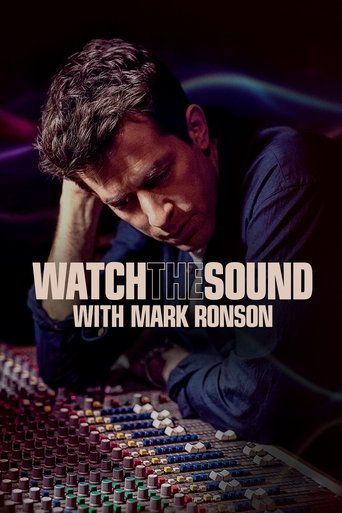
Watch the Sound with Mark Ronson
2021
 TV
TV
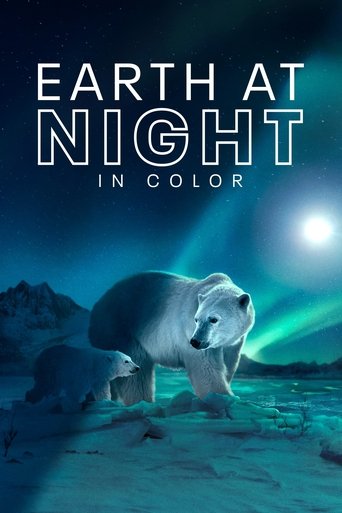
Earth at Night in Colour
2020
 TV
TV
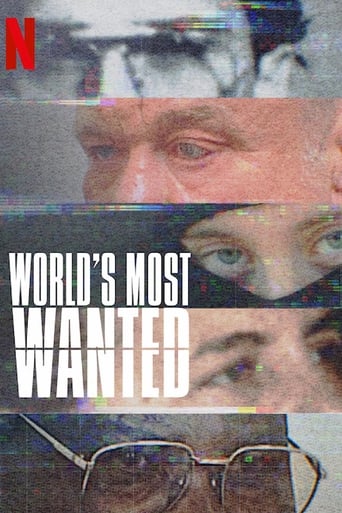
World's Most Wanted
2020
 TV
TV
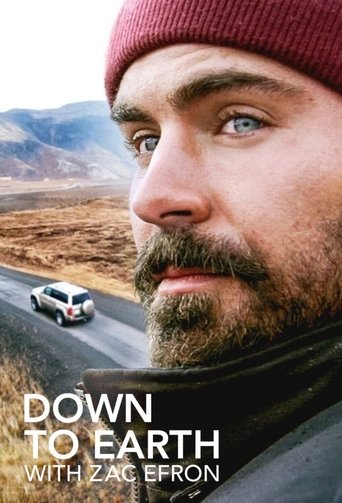
Down to Earth with Zac Efron
2020
 TV
TV
History 101
2020
 TV
TV
Leaving Neverland
2019
 TV
TV
Eli Roth's History of Horror
2018